The Phuket Vegetarian Festival runs from 10 to 18 October 2026, with the Go Teng pole raised at 5pm on 9 October to open it. For nine days, more than 40 Chinese shrines across the island hold street processions, fire-walking and shrine ceremonies, and thousands of local families eat kin jay — a strict diet with no meat, dairy, eggs or pungent vegetables. It is a religious observance first and a spectacle second.
Do you know why Phuket Town fills with incense smoke and firecracker noise for nine days every October? Yes — and the answer has almost nothing to do with tourism. It is one of the oldest continuously observed festivals in southern Thailand, it belongs to the island's Thai-Chinese community, and most visitors who come for the photographs leave without understanding a single thing they watched.
This guide is the other way round. What the nine days mean to the families keeping them, what the rules are, where to stand, and how to be a guest rather than an audience.

What the Phuket Vegetarian Festival Actually Is
The festival is Phuket's version of the Nine Emperor Gods Festival, a Taoist observance held across the Chinese diaspora in Thailand, Malaysia, Singapore and Indonesia. It begins on the eve of the ninth lunar month and runs for nine days, which is why the dates move every year. In 2026 that puts it from
Saturday 10 October to Sunday 18 October.
The Tourism Authority of Thailand's Phuket office expects between
140,000 and 150,000 visitors and at least
1.4 billion baht in economic circulation across the festival period, with Thai nationals the largest group and significant numbers arriving from Singapore and Malaysia (TAT Phuket Office, reported by
The Phuket News, October 2026). Those are not tourist-brochure numbers. They are a measure of how much of the island genuinely stops for this.
Worth saying plainly: for the people taking part, this is not a performance. The processions are not scheduled for cameras, the piercings are not a stunt, and the shrines are working religious buildings for the other fifty-one weeks of the year.
Where It Came From: A Travelling Opera Troupe in Kathu, 1825
The origin story is specific and local. In 1825 a travelling Chinese opera company performing in Kathu fell seriously ill. The troupe concluded they had neglected their annual vegetarian rite, improvised the ceremony as best they could, and recovered. Kathu's residents took up the practice, and it has been repeated every year since — making it the oldest festival of its kind in Thailand (Phuket 101, 2026).
Kathu Shrine is still treated as the festival's birthplace, and it is the reason the celebration is centred on Phuket rather than anywhere else in the country. If you only visit one shrine for its history rather than its crowds, that is the one.
The Ten Rules Local Devotees Keep for Nine Days
Devotees observe ten precepts for the full nine days. They are not suggestions, and families who keep them keep all of them:
- Wear white for the duration of the festival.
- Abstain from meat and all animal products.
- Maintain physical cleanliness throughout.
- Abstain from alcohol.
- Refrain from lying, cheating and stealing.
- Abstain from sexual activity.
- Avoid pungent foods, garlic above all.
- Keep separate cooking utensils from non-jay food.
- Those in mourning do not take part.
- Women who are menstruating or pregnant do not take part.
Visitors are not expected to keep any of this. But knowing the list changes how the nine days look. The white clothing everywhere is not a dress code, it is nine days of discipline worn in public.

Kin Jay Is Not the Same as Vegetarian — Here Is the Difference
This is the single most common misunderstanding, and it matters if you are ordering food.
Jay is a religious standard, not a dietary preference. The English name "Vegetarian Festival" undersells how strict it is.
| Ingredient |
Ordinary vegetarian |
Kin jay (festival standard) |
| Meat and poultry |
Excluded |
Excluded |
| Seafood and fish sauce |
Often allowed |
Excluded |
| Eggs |
Usually allowed |
Excluded |
| Dairy and milk |
Usually allowed |
Excluded |
| Garlic, onion, shallot, chives, leek |
Allowed |
Excluded — all five |
| Alcohol |
Allowed |
Excluded |
| Shared cooking utensils |
Not a concern |
Excluded — separate pans required |
The five pungent vegetables — garlic, onion, shallot, chives and leek — are the part that catches people out, because they are in almost every Thai dish you have ever ordered. A kitchen that simply leaves the chicken out of a pad kra pao has not made jay food.
How to Spot a Jay Kitchen: The Yellow Flag and the Red Character
You will see small yellow flags appear outside restaurants, market stalls and even petrol-station food counters in the days before the festival. The red character on them is 齋 —
jay — and it signals religious observance, not a vegetarian menu option.
A yellow flag means that kitchen has gone jay for the week: separate utensils, none of the excluded ingredients, no exceptions. It is the most reliable thing to look for, and it is free to anyone willing to read one character. The street food around Jui Tui Shrine on Ranong Road is where most visitors eat, and it is genuinely good.

The Ma Song, and Why People Pierce Their Faces
The images that travel furthest from this festival are of the
Ma Song — spirit mediums who enter a trance state and pierce their cheeks, sometimes with objects as improbable as a petrol pump nozzle, a model warship or a car shock absorber (Phuket 101, 2026).
The purpose is not endurance and it is not display. The Ma Song are understood to carry the community's misfortune on its behalf — the piercing transfers it to them, so that everyone else is spared it for the year. That framing is worth holding on to before you raise a camera. You are watching someone take on something for other people.
Fire-walking ceremonies take place on several evenings, typically around 8pm, alongside bladed-ladder climbing at various shrines.
The Nine Days at a Glance: Where to Be and When
| Date |
What happens |
Where |
| Fri 9 Oct |
Go Teng pole raising, 5pm — the gods are invited in |
Shrines island-wide, Kathu first |
| Sat 10 Oct |
Festival opens, jay kitchens begin |
Island-wide |
| Sun 11 Oct |
Major street processions begin, departing 6–8am |
Phuket Town shrines |
| Mon 12 – Tue 13 Oct |
Daily morning processions, shrine ceremonies |
Rotating by shrine |
| Wed 14 – Sat 17 Oct |
Fire-walking evenings, typically from 8pm |
Jui Tui, Bang Neow, Sam Kong and others |
| Sun 18 Oct |
Closing procession and farewell rituals |
Saphan Hin, Phuket Town |
| Mon 19 Oct |
Poles lowered, festival formally ends |
Shrines island-wide |
Shrine-by-shrine timings are published locally each year and change. The main participating shrines are Jui Tui and Bang Neow in Phuket Town, Sam Kong, Sui Boon Tong, Kio Thian Keng at Saphan Hin, Kathu Shrine, Cherng Talay, and Tha Rua in Sri Sunthon — the closest major shrine to the Koh Kaew and Boat Lagoon Marina side of the island.
How to Watch a Morning Procession Without Getting in the Way
- Arrive before 6am. Processions depart shrines between 6 and 8am and the good positions are gone by first light.
- Wear white, with long sleeves, long trousers and closed shoes. Firecrackers burn cloth and bare skin.
- Bring earplugs. This is not a precaution, it is the single most common regret of first-time visitors.
- Stand back from the front and the sides of the procession rather than walking alongside it.
- Never touch the Ma Song or the objects they are pierced with.
- Ask before taking close-up photographs of anyone, mediums included.
- Keep meat, alcohol and anything containing them well away from shrine grounds.
- Leave before you get tired of it, not after. The crowds thicken and the noise compounds through the morning.
What to Wear, and What to Bring
White, head to toe, is the convention and visitors are welcome to follow it. It is read as respect rather than imitation. Long sleeves and long trousers are practical rather than modest — firecrackers are thrown in quantity at street level and they land on people.
Bring earplugs, a mask if crowds and smoke bother you, water, and shoes you do not mind ruining. Leave the drone at home.
Getting Around Phuket Town During the Festival
Expect traffic disruption in Phuket Town and along every procession route for the full nine days. Roads close at short notice, and the morning processions in particular make the old town centre effectively impassable by car between dawn and mid-morning.
The workable approach is to park outside the centre and walk in, or to stay north of town and drive down early. Koh Kaew sits
roughly fifteen minutes north of Phuket Town, which is far enough to sleep through the firecrackers and close enough to be at a shrine by six.
Learning the Culture Without Treating It as a Show
The honest distinction is between watching and consuming. A few things that cost nothing and change the experience entirely: learn what the yellow flag means before you eat; find out which shrine you are standing in and what it is for; eat jay food at a stall rather than only photographing it; and accept that some of what happens will be uncomfortable to watch and is not staged for your comfort.
The Thai name,
kin jay, simply means "eat jay". The festival is named after the food because the food is the part everyone shares — the processions belong to the shrines, but the nine days of eating belong to the whole island. Eating a bowl of jay noodles from a yellow-flag stall is the most genuine participation available to a visitor, and nobody will mind at all.

Where Boat Lagoon Marina Fits: A Quiet Day Between Early Mornings
Festival days start before dawn and the noise does not really stop. The thing most visitors underestimate is how much recovery time nine days of this requires, particularly with children.
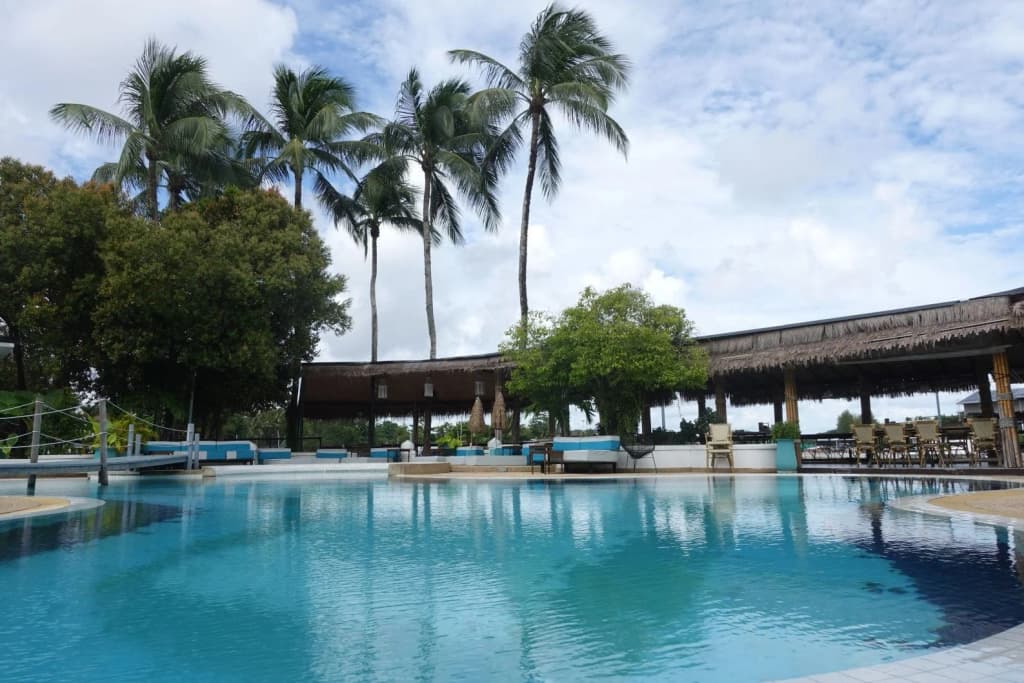
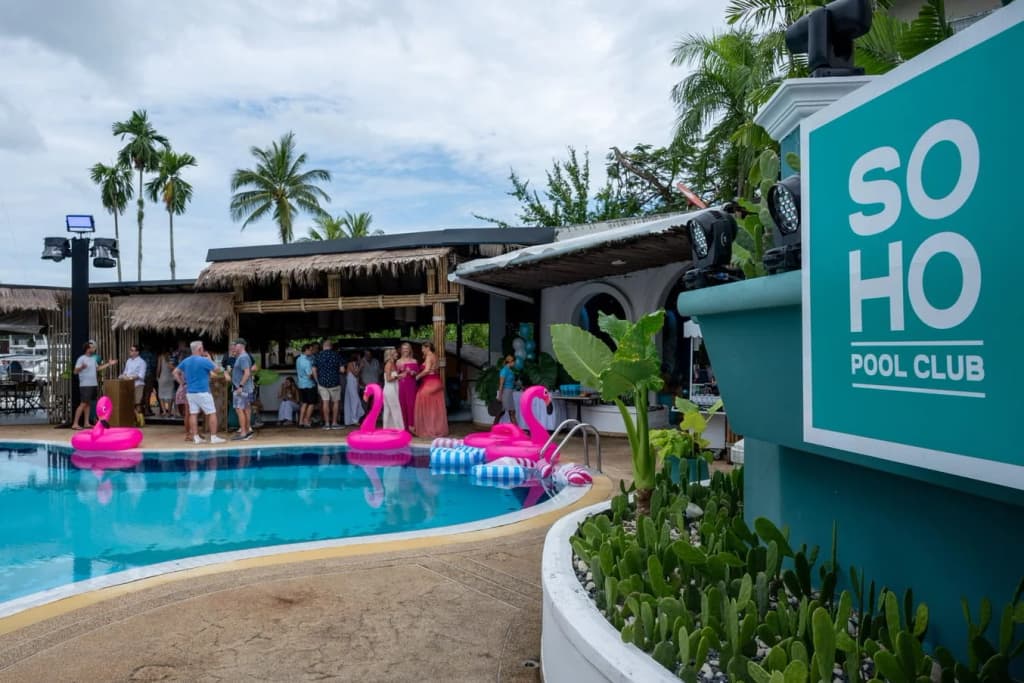
Soho Pool Club sits at Boat Lagoon Marina in Koh Kaew, about fifteen minutes north of the old town — close enough to get back for an evening ceremony, far enough that the afternoon is actually quiet. The venue opens at 8 AM and the kitchen from 11 AM, and the pool is free to use when you order something from the bar or kitchen. After a 5am start in the smoke, an afternoon beside the water is a reasonable thing to want.
As one visitor put it in a Google review:
"Amazing club! Staff were really friendly... the food was incredible and the club was a great find as after lunch we enjoyed the swimming pool until evening." — Nolan White
For the afternoons when the heat or the rain makes outdoors unappealing,
Soho Wellness runs a combined infrared sauna and ice bath session at 300 THB, and the air-conditioned simulator bays at
SIMPRO Academy Phuket are inside the same complex — quiet, cold, and a long way from a firecracker.
Eating Vegetarian at Soho During the Nine Days
Soho is not a jay kitchen, and this guide is not going to pretend otherwise. Jay cooking is a religious discipline with its own utensils and its own rules, and the places doing it properly during these nine days are the shrine kitchens and the yellow-flag stalls in Phuket Town. Go and eat there — that is genuinely part of the point.
What the
Soho kitchen can do is work with you. If you are keeping a meat-free diet for the nine days and want a quiet lunch by the pool afterwards, say so when you order and the team will put something together from what is already on the
2026 menu. Ask rather than assume — that is the honest answer, and a better one than a festival menu invented for a week.
Chef Ai leads the kitchen and sources from local farmers and fishermen, so what is available shifts with the week's produce. A phone call ahead on
+66 81 787 7702 saves a conversation at the table.

When is the Phuket Vegetarian Festival in 2026?
The festival runs from Saturday 10 October to Sunday 18 October 2026. The Go Teng pole-raising ceremony that opens it takes place at 5pm on Friday 9 October, and the poles are lowered on 19 October. The dates follow the Chinese lunar calendar and change every year.
What is the Phuket Vegetarian Festival schedule?
Street processions begin on 11 October and run most mornings, departing shrines between 6am and 8am. Fire-walking ceremonies take place on several evenings from around 8pm, typically between 14 and 17 October. The closing procession and farewell rituals are held at Saphan Hin in Phuket Town on 18 October. Individual shrine timings are published locally and vary year to year.
What food can you eat during the Phuket Vegetarian Festival?
Jay food — no meat, seafood, eggs, dairy or alcohol, and none of the five pungent vegetables (garlic, onion, shallot, chives and leek). Look for stalls and restaurants flying a small yellow flag with the red character 齋. Street food around Jui Tui Shrine on Ranong Road in Phuket Town is the easiest place to start.
Is kin jay food the same as vegetarian?
No. Jay is stricter. Ordinary vegetarian food usually permits eggs, dairy and the onion and garlic family; jay excludes all of them, along with seafood, fish sauce and alcohol, and requires separate cooking utensils. A dish with the meat left out is not jay food.
Why do people pierce their cheeks at the Phuket Vegetarian Festival?
The devotees who do this are Ma Song, spirit mediums believed to be in a trance state. The piercing is understood to transfer the community's misfortune onto the medium, so that the wider community is spared it. It is an act of service rather than endurance or display, which is why spectators are asked not to touch the mediums or the objects they carry.
What should I wear to the Phuket Vegetarian Festival?
White clothing, long sleeves, long trousers and closed shoes. White is what devotees wear for the nine days and visitors following it are read as respectful. The long sleeves and closed shoes are practical: firecrackers are thrown at street level in large numbers and can burn clothing and skin. Bring earplugs.
Is the Phuket Vegetarian Festival safe for tourists and children?
It is open to everyone and visitors are welcome, but the noise and crowds are intense and some rituals are confronting to watch. Firecracker volume at close range is genuinely loud, so earplugs matter for children in particular. Keep well back from the front and sides of processions, and consider watching from a side street rather than the main route with younger children.
Where can I eat vegetarian near Boat Lagoon Marina during the festival?
The strict jay kitchens are concentrated in Phuket Town and at the shrines, about fifteen minutes south of Boat Lagoon Marina. Closer to the marina, Soho Pool Club in Koh Kaew is not a jay kitchen, but the team will work with a meat-free request from the existing menu if you mention it when ordering. Call
+66 81 787 7702 or email
info@simbaseatrips.com to check ahead.
A Place Where the Island Slows Down With You
Nine days of processions, smoke and 5am starts is a lot to take on, and the visitors who enjoy the
Phuket Vegetarian Festival most are usually the ones who build in somewhere to stop. Watch a morning properly, eat jay food from a yellow-flag stall, learn what you were looking at — and then go and sit somewhere quiet for the afternoon.
Soho Pool Club is at Boat Lagoon Marina, Koh Kaew, open daily 8 AM to 10 PM with the kitchen from 11 AM. Free parking, free Wi-Fi, and the pool free to use when you order from the bar or kitchen.
Make a reservation, or call
+66 81 787 7702.
More on the island's seasons and slower corners on the
Soho blog. Background on the wider tradition is on Wikipedia's
Nine Emperor Gods Festival page.