
November 6, 2025

Infrared saunas heat your body directly with light at roughly 49–60°C, while traditional saunas heat the air around you to 65–90°C. Infrared is gentler, cheaper to run and easier to fit into a small space; traditional heat is more intense, more social and culturally richer. Neither is objectively better — the right one depends on your heat tolerance, your budget and how you like to relax.
Table of Contents
ToggleSaunas have been part of wellness routines for centuries, and they are still one of the simplest ways to unwind. But if you are choosing between the two types available today, the decision is less obvious than it looks.
Infrared saunas have become the popular modern choice, mostly on the strength of their technology and their comfort. Traditional saunas carry a long history and real cultural weight — in Finland, sauna is closer to a national institution than a wellness product. Both work. They just work differently, and that single difference — light versus hot air — cascades into temperature, session length, energy bills, installation and even the social feel of the room.
Here is an honest comparison of both, including which claims about saunas hold up and which do not.
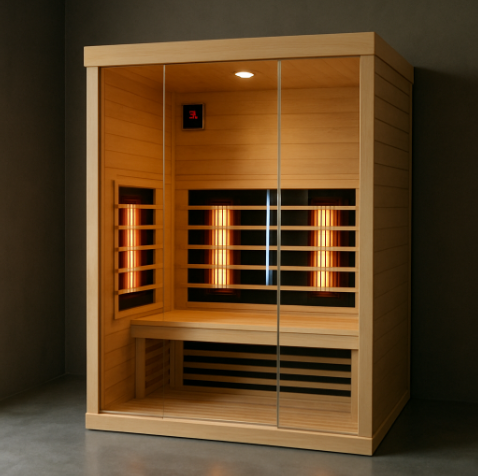
A traditional sauna heats the air in the room through a stove or heater, often with hot stones you can pour water over. Air temperature rises sharply and you sweat heavily as a result. An infrared sauna takes a different route: infrared heaters emit light your skin absorbs, warming you directly without superheating the room.
Infrared is usually favoured for how comfortable it feels. Traditional delivers the classic experience — the wall of heat, hot wood, the steam hiss — that plenty of people specifically want. There is something here for most preferences.
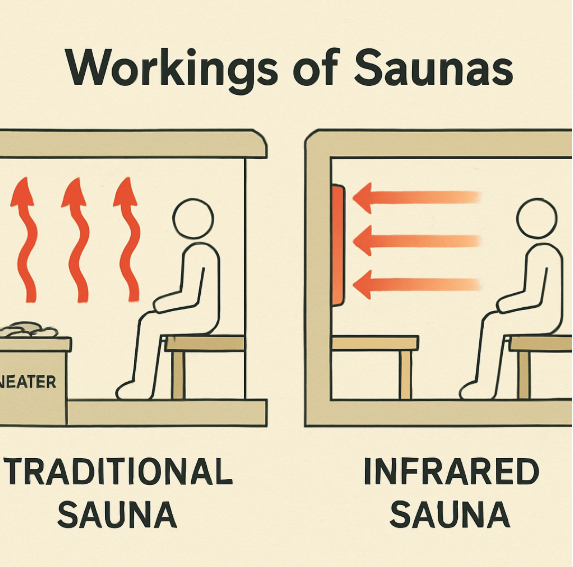
Infrared heaters emit wavelengths of light that your skin absorbs efficiently, so heat reaches you without the room becoming uncomfortably hot first. Because the light penetrates the skin rather than sitting on top of it, the warmth feels deep and gentle at once. Typical operating range is 49–60°C (120–140°F).
That lower ambient heat is why infrared users can stay in longer, and why infrared suits anyone who finds high heat unpleasant. It is also more energy efficient, since you are not paying to heat a whole room of air — current technology applied to very old heat-therapy principles.
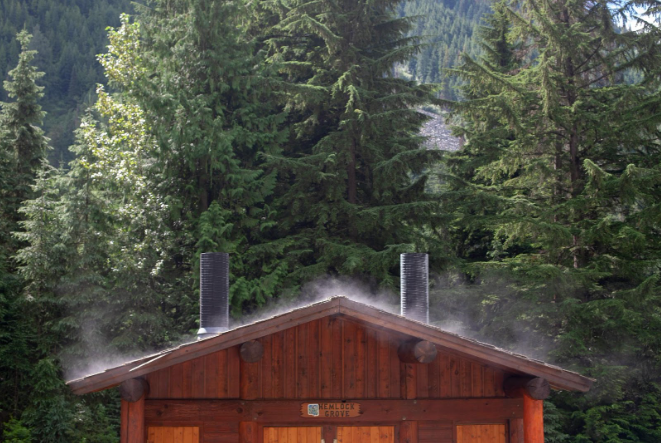
Traditional saunas have roots in cultures worldwide and work by heating the air so warmth envelops you from every direction. A stove raises the room temperature, and you feel it intensely because it is warming both the air and your body at once. Typical range is 65–90°C (150–195°F), which lifts heart rate and brings on heavy sweating quickly.
The experience varies with humidity — some prefer bone-dry heat, others want the steam. Traditional saunas also tend to be social spaces: the shared bench is part of the point, not an accident of design. The Wikipedia entry on sauna covers that Finnish heritage and its UNESCO recognition. They use more energy, but they remain much loved for exactly that immersive heat.
Full spectrum units use several wavelength bands rather than one, each behaving slightly differently in the body:
The practical advantage is adaptability: biasing a session towards one band lets you tune the experience, more warming on a recovery day and gentler on a rest day. That flexibility appeals to people who use a sauna regularly rather than occasionally, and it is why full spectrum cabins cost more than single-band ones.
The debate keeps going because both types genuinely deliver, just with different strengths.
Infrared tends to be better for: comfort, thanks to lower temperatures and calmer sessions; aches and stiffness, because the warmth reaches joints and muscles; and relaxation, since you are not battling the heat.
Traditional tends to be better for: cardiovascular response, as higher temperatures push heart rate harder; social use, with communal benches and shared ritual; and cultural authenticity, with centuries of tradition behind the format.
Both reduce stress, and regular use of either can make a real difference to mood and sleep. Both open pores and increase blood flow to the skin, which is why complexions often look better afterwards. Both temporarily raise heart rate and metabolic rate the way moderate exercise does. And both relax muscles, which is why athletes use heat for recovery. The choice comes down to heat tolerance and how you like to spend the time.
Saunas are famous for making you sweat, and both types do it well. It is worth being precise about what that achieves, because this is where sauna marketing tends to overreach.
Sweating is your body’s cooling system. As core temperature rises, sweat is released and evaporates, carrying heat away — the mechanism is explained plainly in the Wikipedia article on perspiration. Sweat is mostly water and salts. Filtering waste out of your bloodstream is the job of your liver and kidneys, not your skin.
What you can reasonably expect from a heavy sweat:
What you should not expect is for sweat to flush toxins or heavy metals out of your system, or to boost your immune system. Those claims circulate widely in the sauna industry and the evidence does not support them — we removed that language from our own wellness pages in 2026 for exactly that reason. The real benefits are good enough without them.
Temperature and humidity do change the character of the sweat: traditional brings it on faster and harder, infrared more gradually over a longer session. Either way, hydrate.
Heat exposure has a measurable effect on circulation. Both types raise heart rate in a way that resembles moderate exercise, and blood vessels near the skin dilate to shed heat. Traditional saunas, being hotter, drive a stronger response — which is why sauna bathing has been studied for its cardiovascular associations.
Infrared produces a comparable circulatory response through gentler heat, which makes it more manageable if you cannot comfortably sit in a 90°C room. One caveat worth stating plainly: a sauna is not a treatment, not a substitute for exercise or medical care, and if you have a cardiovascular condition you should talk to your doctor rather than assume a benefit.
This is where saunas earn their place in most routines. Heat relaxes muscle tissue, easing tension and general soreness. Infrared is often chosen specifically for aching joints and stiff muscles, because the warmth reaches deeper than surface heat and feels targeted.
Traditional saunas do the same job through sheer intensity. Either way, regular use tends to improve how you feel between training sessions. Pairing heat with cold is where it gets interesting — contrast therapy, a sauna round followed by a cold plunge, is the format most recovery-focused users settle on, and our ice bath and recovery guide lays out the sequence.
Comfort shapes the whole experience, and it is the clearest infrared advantage. Lower temperatures make for a session you can extend without gritting your teeth — which matters if you want to sit and breathe slowly for twenty minutes.
Traditional saunas offer the opposite pleasure: invigorating heat and a steamy atmosphere that feels like a proper escape. For many people that bracing quality is the entire appeal.
It comes down to how much heat you actually enjoy, and how much room you have.
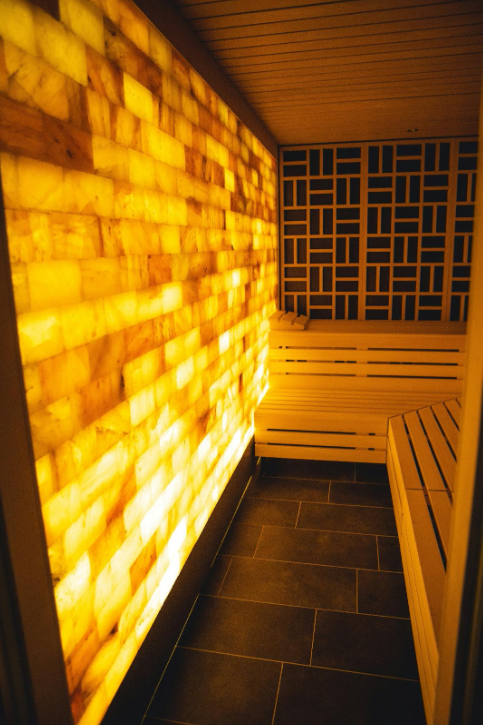
Running cost matters more than people expect, especially in a hot climate where you may also be paying to cool the rest of the building. Infrared uses less electricity because it heats the body rather than a room of air. Traditional saunas need substantial energy to reach and hold high temperatures, and heating air and stones for long stretches draws real power — visible on the bill and in the footprint.
Space is the first practical question. Infrared cabins are more compact, easier to install and need less ventilation than traditional builds.
Maintenance differs too. Traditional saunas need heating elements checked, stones replaced periodically and timber cared for — water, steam and high heat are hard on materials. Infrared units ask less: no water system, simpler electrics, fewer things to go wrong.
Worth saying plainly: buying is not the only option. A day pass at a venue with commercial-grade equipment costs a fraction of a cabin and requires no maintenance from you at all.
Saunas are largely safe, but not risk-free. High heat can cause dehydration or dizziness if you overdo it, and some people should take particular care.
Build up gradually rather than starting with the longest, hottest round you can manage. Overexposure adds risk without adding benefit.
Saunas carry deep cultural roots, particularly in Finland, where the practice is tied to ritual, hospitality and communal gathering. Sitting together in the heat is much of the point. Infrared grew out of a different impulse — modern wellness, individual benefit, personal convenience — which says something about how lifestyles have changed.
The two are converging, though. Put an infrared cabin in a communal setting and the old social function reappears, which is roughly what we wrote about in our piece on Phuket’s social wellness movement.
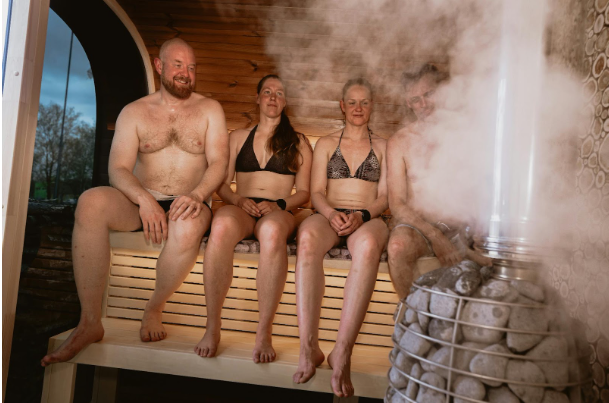
There is no objective winner, so think about what you actually value.
Choose infrared if you want: lower heat, energy efficiency, a compact footprint and longer comfortable sessions — especially if you are heat-sensitive.
Choose traditional if you want: intense heat, steam, and social and cultural depth. No infrared cabin replicates it.
Budget and available space will make the final call for most people. And if you are genuinely undecided, the cheapest way to resolve it is to spend an afternoon in each before you spend anything at all.
If you are in Phuket and want to test the infrared experience rather than read about it, Soho Wellness sits poolside inside Soho Pool Club at Boat Lagoon Marina, Koh Kaew, on the island’s quieter east coast.
The equipment is specific rather than generic: a Clearlight infrared sauna with five-person capacity, and Bison ice baths set up alongside it for contrast rounds. There is a quiet lounge with soothing music, gentle lighting, complimentary infused mineral water and fresh herbal tea — and wellness access includes the pool and the kitchen, so a session can turn into a whole afternoon.
Owners Andrea and Paul Chappell built Soho around that idea: heat, cold, water and good food in one place, without moving your car. Chef Ai’s kitchen serves from 11 AM if you want lunch after your round — the current 2026 menu is worth a look — and upstairs The Clubhouse has the game on. Current day-pass and membership rates are shown live on the wellness booking page; for anything else, call +66 81 787 7702 or email info@simbaseatrips.com.
Neither is better in the abstract. Infrared wins on comfort, running cost, space and maintenance. Traditional wins on heat intensity, steam and communal atmosphere. If you are heat-sensitive or want longer, calmer sessions, choose infrared. If you want a bracing, sociable, ritual experience, choose traditional. Most people who try both know within one session which one suits them.
Roughly 49–60°C (120–140°F). A traditional sauna typically runs at 65–90°C (150–195°F). The lower infrared temperature is the reason sessions feel more manageable — the light warms your body directly, so the room does not need to be as hot to produce a heavy sweat.
No. Sweat is mostly water and salts, and clearing waste from your bloodstream is the work of your liver and kidneys, not your skin. Heavy sweating does clean out pores and leaves skin feeling fresher, and a sauna round is a reliable way to feel reset — but detoxification and heavy-metal elimination claims are not supported by the evidence. We removed that language from our own wellness pages in 2026.
One that uses near, mid and far infrared wavelengths rather than a single band. Each penetrates to a different depth, so you can bias a session towards gentler surface warmth or deeper, more relaxing heat. The advantage is adaptability for regular users; the trade-off is a higher price than a single-band cabin.
Ten to fifteen minutes is a sensible round for most healthy adults, then a cool-down, then repeat if you want. Infrared’s lower temperature allows longer rounds comfortably. Build up gradually rather than starting with your longest session, hydrate before and after, and step out if you feel light-headed. Consistency does more than heroics.
Anyone with a heart condition, high or low blood pressure, or any cardiovascular issue should speak to their doctor first, as should anyone pregnant. Avoid alcohol before a session. Our infrared sauna and ice bath are safe for most healthy adults, and the team will happily talk you through easing in gradually — but participation is at your own risk under Soho’s terms, and a sauna is not a treatment for any condition.
A Clearlight infrared sauna with five-person capacity and Bison ice baths as the cold plunge, plus a tranquil lounge with soothing music, gentle lighting, comfortable seating, complimentary infused mineral water and fresh herbal tea. Wellness access also includes full use of the Soho Pool Club facilities during your session — the pool, the restaurant and the bar.
Soho Wellness is inside Soho Pool Club at 23 Boat Lagoon Marina, Moo 2, Koh Kaeo, Mueang Phuket 83000, with free on-site parking and a short drive from Phuket Town and the airport. Soho is open daily 8 AM to 10 PM, kitchen 11 AM to 10 PM. Day-pass and membership rates are quoted live on the Soho Wellness page. Booking ahead is sensible at weekends and for groups — call +66 81 787 7702, email info@simbaseatrips.com, or use the contact page.
Infrared or traditional, both do the job — and the better question is which one you will actually use twice a week. Gentle warmth or a wall of heat, the value is in the routine rather than the specification sheet. Relax. Refresh. Recharge.
If you would rather try before you buy, the Clearlight sauna and Bison ice baths at Soho Wellness are a few steps from the pool at Boat Lagoon Marina, Koh Kaew. Book your day pass or ask about memberships on the wellness page, get in touch through the contact page, call +66 81 787 7702, or email info@simbaseatrips.com. Come for the heat. Stay for the afternoon.
Paul Chappell is co-owner of Soho Pool Club at Boat Lagoon Marina, Koh Kaew, which he runs alongside his wife Andrea. Together they built Soho as Phuket’s Social House — a marina-side venue that brings together relaxed dining, a poolside lounge, wellness, live sport, and simulator racing under one roof. Soho Wellness, with its five-person Clearlight infrared sauna and Bison ice baths, was added because guests kept asking where they could recover properly after a day on the water. Paul also leads the flight-simulation programme at the group’s SimPro Academy, drawing on more than 25 years as an airline pilot.
Leave a Comment: